





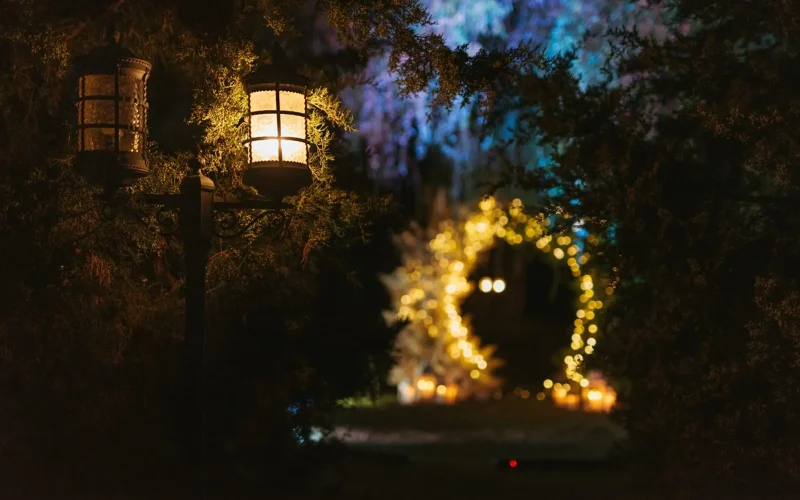
Imagine stepping into your garden at dusk and being welcomed by a soft, inviting glow that brings every path, plant, and corner to life. With the right lighting choices, you can transform any outdoor space into a safe, functional, and beautifully atmospheric retreat. This guide will show you how to light your garden like a true specialist — effortlessly and step by step.
Table of Contents
- Understand the purpose of garden lighting
- Know the basics of outdoor lighting types
- Assess your garden’s features and layout
- Choose lighting styles based on garden type
- Select the right fixtures for specific areas
- Use lighting to create zones and atmosphere
- Plan for smart energy management
- Installation tips and safety guidelines
- Common mistakes to avoid
- Final checklist: Lighting your garden like a specialist
Understand the purpose of garden lighting
Before choosing specific lights or placing them around your garden, it’s essential to define the purpose of each lighting point. Outdoor lighting isn’t just about aesthetics — it plays several important roles in how your outside space functions and feels.
Functional vs decorative lighting
Start by asking yourself a simple question: What do I need this light for? If the goal is to see clearly when walking down a path, focus on practical path lights or driveway lights. If you want to create a warm, inviting mood during evening gatherings, string lights or soft warm white LEDs around your patio or sitting area can do wonders.
Functional lighting focuses on:
- Visibility: illuminating walkways, stairs, and dark areas to prevent accidents,
- Navigation: guiding people safely across the garden at night,
- Security: using porch lights or spotlights near doors and gates to deter intruders.
Decorative lighting helps:
- Highlight focal points like trees, flower beds, or garden sculptures,
- Set ambience with layered light and soft glows,
- Enhance architectural features of your house and garden structures.
Both styles can—and should—work together. For example, a solar powered LED spotlight aimed at a tall tree can improve visibility and add drama to your garden scene.
Creating a cosy and functional outdoor space
Well-planned lighting can transform your garden into an evening retreat, perfect for relaxing after sunset. Thoughtful placement of outside lights helps define zones, extend your living area, and support how you use each part of your outdoor space.
To achieve a cosy atmosphere, aim for:
- Warm tones like warm white LEDs instead of harsh, cold light,
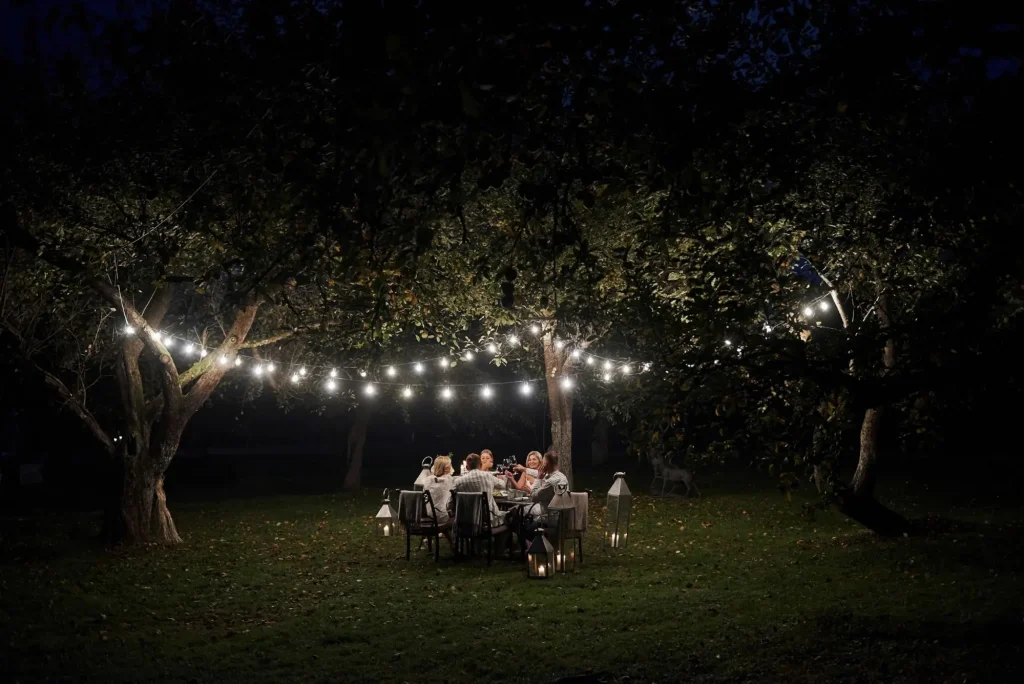
- Layered lighting with string lights, lanterns, or low-level path fixtures,
- Subtle glows that don’t overpower the natural beauty of the garden.
At the same time, remember that a poorly lit garden can feel disjointed and uninviting. Use light intentionally to connect paths, open up dark areas, and naturally draw the eye across the space.
Security and safety with style
Safety doesn’t have to mean ugly floodlights. Today’s LED lamps come in sleek, modern designs that enhance security and style. Install porch lights with motion sensors near doors or garages, and consider floodlights or spotlights with timers to reduce electricity consumption while keeping your outside space secure.
By combining functional, decorative, and energy-efficient lighting choices, you not only enhance your garden—you make it safe, stylish, and ready for any use after dusk.
Know the basics of outdoor lighting types
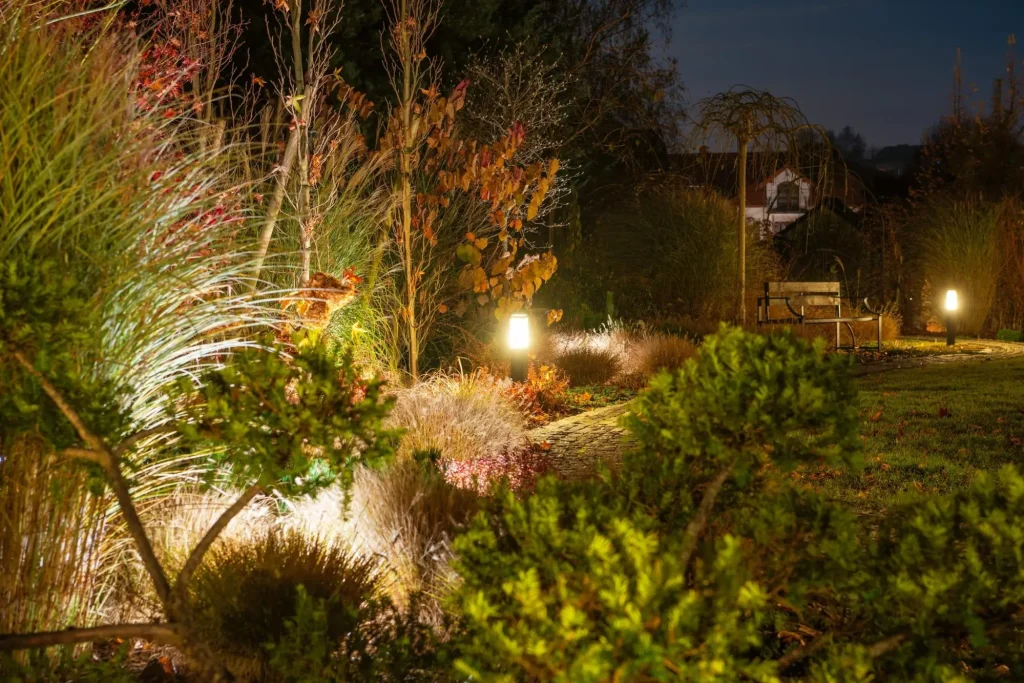
When it comes to choosing the right lighting for your garden, the range of available options can be overwhelming. But before you dive into styles or placements, it’s important to understand the basic types of lighting technologies used outdoors — and why LED is the clear leader.
Why LED is the best choice for outdoor use
If you want lighting that’s long-lasting, modern, and energy-efficient, LED lamps should be your go-to solution. Here’s why they stand out:
- Low energy consumption – LEDs use up to 80% less power than traditional bulbs, helping you save energy and lower your electricity costs.
- Extremely long lifespan – quality LEDs can last tens of thousands of hours without needing replacement.
- Minimal heat output – safe to touch and ideal for use near plants or along paths.
- Customizable light tone – from cool daylight to warm tones like warm white, which adds a cosy feel to your outside space.
- Designed for durability – most outdoor LEDs are weather-resistant and built to handle rain, snow, or humidity, making them perfect for outdoor use.
Thanks to these advantages, LED is the most environmentally friendly and cost-effective option for outdoor lighting — whether you’re planning to light up a driveway, patio, or flower beds.
How LED compares to other lighting technologies
To better understand why LEDs dominate the outdoor lighting market, take a look at how they stack up against other common options:
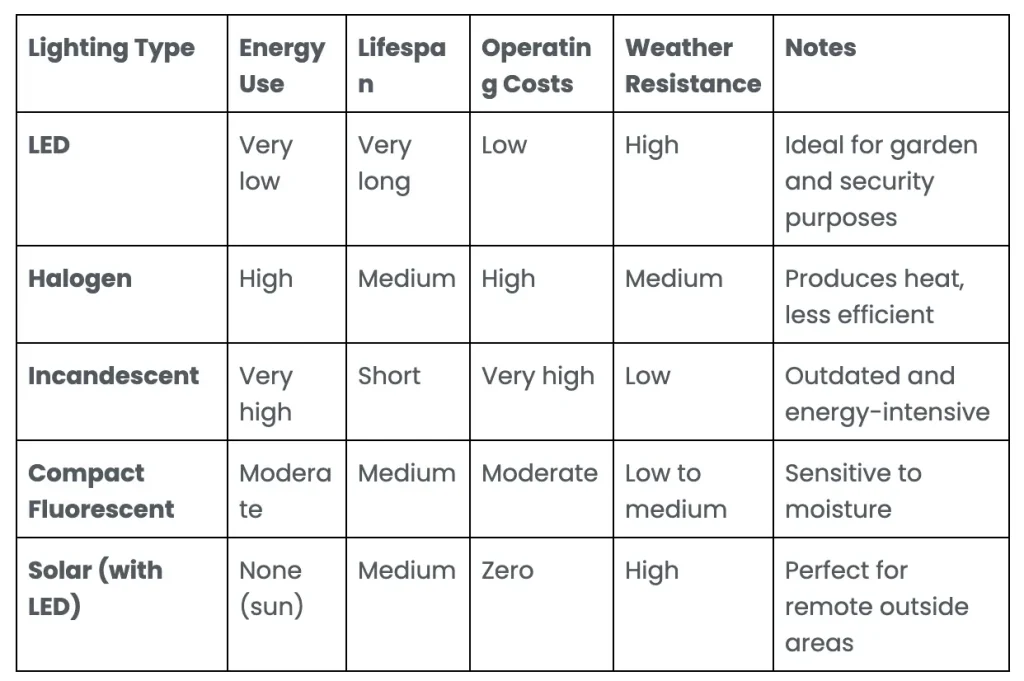
As shown above, LED lighting — especially solar-powered LEDs — provides a balance of quality, efficiency, and reliability that’s hard to beat.
Who should choose LED lighting?
LEDs are a great choice for:
- Anyone looking to reduce energy consumption and lower monthly bills,
- Gardeners who want low-maintenance lighting with long service life,
- Homeowners with architectural features, plants, or fences that need highlighting,
- People seeking outdoor lights that suit a variety of styles, from modern to rustic.
Whether you’re lighting a dark pathway, creating a cosy atmosphere on your patio, or installing solar lights to enhance your garden without wiring — LED will meet your needs while helping you save energy and reduce your environmental impact.
Assess your garden’s features and layout
Before you begin installing any lights, take time to explore your garden as it is. The key to a well-lit garden isn’t just about choosing the right lights — it’s about understanding the space you’re working with. Start by identifying the physical elements, natural features, and practical needs of your outdoor area.
Create a simple garden sketch
Grab a notebook or open a basic drawing app and sketch out a rough map of your garden. It doesn’t have to be perfect — the goal is to mark:
- Key structures: your house, garage, shed, fence,
- Natural features: trees, flower beds, hedges, plants,
- Functional zones: driveway, patio, seating areas, paths, stairs, gates,
- Existing lights, if any.
This visual reference will help you make better decisions about what to light and where.
Look for critical lighting zones
Once your layout is mapped, take a walk through the garden in the late afternoon and again at dusk. This will help you spot dark areas and places where lighting is essential for safety, movement, or visibility.
Pay special attention to:
- Narrow or uneven walkways and stairs,
- Entrances and porches,
- Corners or shaded zones where visibility drops after sunset,
- Plants or surfaces that get lost in the dark.
These are the areas where you may want to add pathway lights, wall-mounted outside lights, or solar powered lights that automatically turn on in low light.
Spot natural focal points and features
Some garden elements deserve to stand out — these will become your focal points. Maybe it’s an old tree with character, a cluster of decorative plants, a sculpted wall, or even the architectural features of your home. Take note of these during your garden walk. While lighting design comes later, identifying them now will help you plan intentional and attractive illumination.
Don’t forget practical challenges
Finally, think about the sunlight your garden gets throughout the day. If you’re considering solar lights, you’ll want to place them where they’ll receive enough exposure. Also take note of:
- Wet zones or drainage areas (which may require weatherproof fixtures),
- Obstructions like low-hanging branches or narrow spaces,
- The availability of power sources (for non-solar lights).
The more clearly you assess your space now, the easier it will be to choose the right outdoor lighting options that balance function, style, and energy efficiency.
Choose lighting styles based on garden type
Not all gardens are created equal — and the lighting that works in a sleek city patio won’t necessarily suit a countryside retreat. Matching your garden lights to the overall style and function of your outdoor space is key to creating a consistent and attractive look. Here’s how to choose the right lighting design based on garden type.
Modern gardens: Clean lines and subtle illumination
Modern gardens usually feature minimal planting, sharp geometry, and well-defined zones like patios or lounging areas. The goal is simplicity with impact.
For these spaces:
- Use built-in or low-profile floor lights to mark paths or borders,
- Opt for sleek, wall-mounted outside lights with neutral tones,
- Warm white LED strip lights or recessed spotlights can highlight architectural features or furniture edges.
Modern gardens also benefit from low-voltage LED systems or hardwired setups, often controlled via smart home apps. Avoid cluttered or overly decorative lighting — focus on clean shapes and subtle contrasts.
Rustic gardens: Charm and warmth
Rustic or cottage-style gardens focus on natural forms, winding paths, and textured greenery. Lighting should feel inviting and soft, enhancing the garden’s natural character.
Recommended options:
- Solar powered lights with warm tones, ideally shaped like lanterns or stakes,
- String lights draped across fences, pergolas, or trees to create a cosy atmosphere,
- Decorative lights with vintage finishes that complement wood, brick, or stone.
Because of the organic layout, it’s often easier to use solar lights or battery-powered LEDs that don’t require cabling. They’re also more adaptable and environmentally friendly.
Small urban gardens: Function meets efficiency
When working with a small garden, every inch matters. These spaces — like city courtyards, balconies, or tiny backyards — need lighting that’s compact, effective, and energy efficient.
Top picks include:
- Wall-mounted porch lights or spotlights that save space and double as security lighting,
- Slimline pathway lights to guide movement without overwhelming the space,
- Compact solar garden lights for easy installation and minimal maintenance.
Here, lighting needs to be multifunctional — it should make the area feel larger, safer, and more usable in the evening. Think vertical: mount lights to fences or walls to free up floor space.
Classic gardens: Elegance and balance
Classic gardens often feature symmetry, focal points like statues or fountains, and a refined, timeless look. Lighting in such spaces should be subtle but structured — echoing the garden’s formal layout.
Try using:
- Discreet floodlights or spotlights angled at key features,
- Uniform rows of path lights to reinforce order and balance,
- Warm white LED fixtures with traditional shapes or casings in bronze or matte black.
Both solar and wired lighting can work here — just ensure the fixtures match the garden’s style and don’t draw attention away from plants or structures.
Select the right fixtures for specific areas
Choosing the right lighting isn’t just about style — it’s also about placing the right type of fixture in the right part of your outdoor space. Whether it’s for safety, ambience, or highlighting special features, each area in your garden benefits from a different lighting approach. And no matter the spot, LED lights are almost always the smartest, longest-lasting, and most energy-efficient choice.
Pathways and driveways: Guide the way
Lighting for paths and driveways helps ensure safety and orientation, especially after dusk. Use:
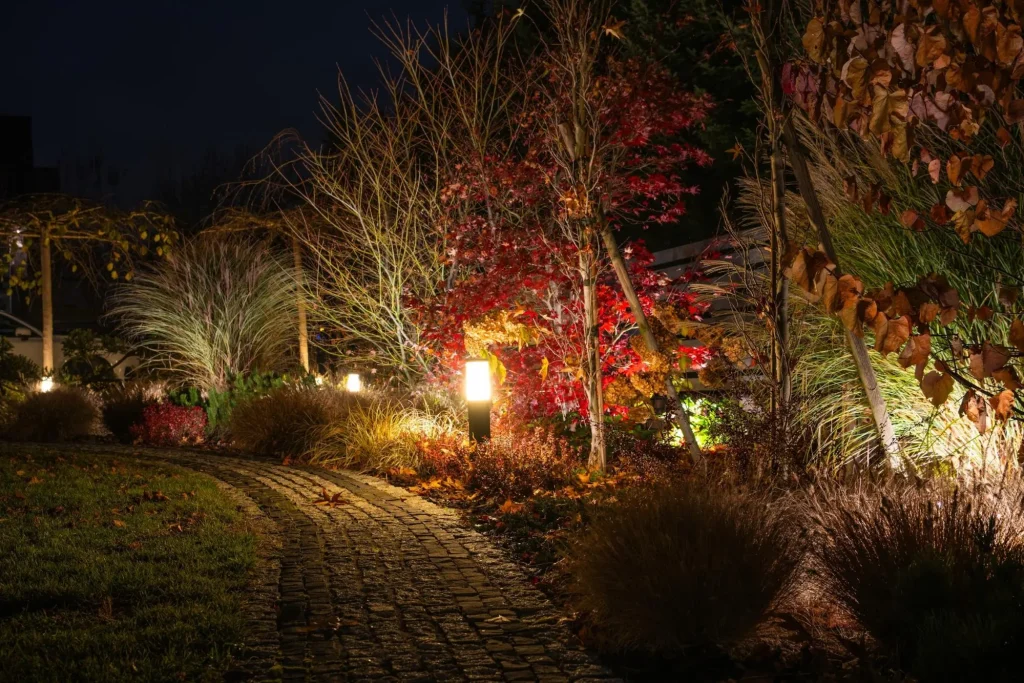
- Path lights installed along walkways — ideally spaced every 1.5 to 2 meters to create even illumination without glare,
- Driveway lights that are either recessed into the ground or mounted at low height to avoid distraction.
Opt for solar powered lights with LED technology for easy, wire-free installation along these routes — especially useful in areas where electrical access is limited.
Entrances and porches: Welcome and protect
Porch lights and entrance fixtures play a dual role — they make your home feel inviting while also boosting security. Ideal options include:
- Wall-mounted outside lights placed around head height on either side of the door,
- LED lantern-style fixtures for a classic look or flush-mounted panels for modern designs.
Choose fixtures with motion sensors or dusk-to-dawn features to improve energy efficiency and enhance security purposes without needing to remember to switch them on.
Accent areas: Add drama and focus
Some parts of your garden deserve extra attention — whether it’s a tree, sculpture, water feature, or textured wall. For these:
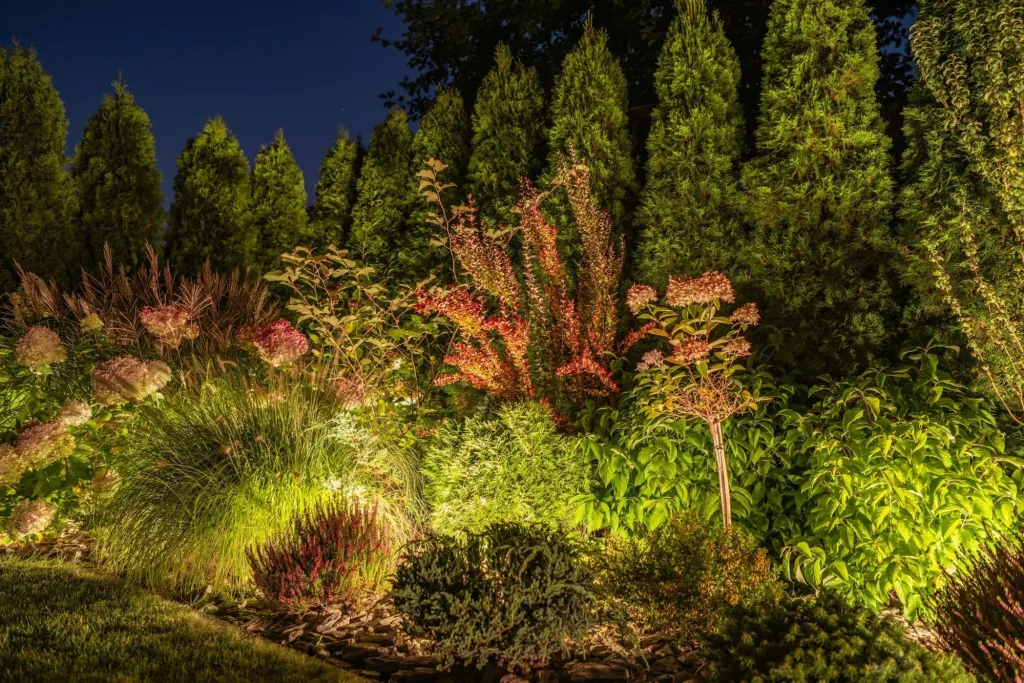
- Use spotlights or directional floodlights to highlight focal points,
- Aim beams upwards or across surfaces to create depth and contrast,
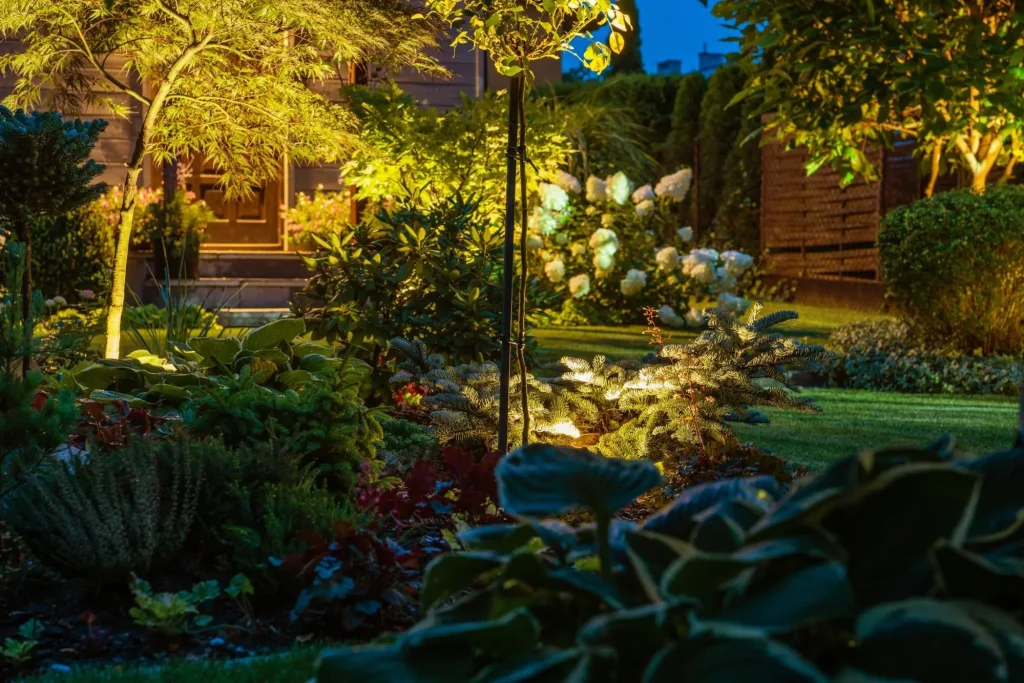
- Place fixtures at the base of trees or behind flower beds for soft, layered effects.
LED spotlights are perfect here — they offer excellent brightness, long life, and crisp illumination without overheating.
Garden beds and decorative areas: Subtle touches
In more delicate spaces — like flower beds, ornamental grasses, or edges of your garden — softer lighting works best. Try:
- Low-level stake lights or solar garden lights for gentle ground-level glow,
- Decorative lights with a warm tone to highlight shapes and colors without washing them out.
These fixtures not only enhance the plants themselves, but also help shape the visual boundaries of your garden at night.
Multipurpose zones: Think flexibility
If you have seating zones, patios, or spaces that change function (e.g., occasional dining areas), choose adaptable lighting:
- Portable lanterns or string lights that can be moved as needed,
- Fixtures with dimmable LED bulbs to adjust brightness depending on the occasion.
Wherever flexibility is needed, LED lights offer the best performance — they’re available in all formats, from pathway lights to wall fixtures, and they consume minimal power while giving maximum effect.
Use lighting to create zones and atmosphere
Outdoor lighting isn’t just about visibility — it’s also about creating a mood and making your garden feel like a natural extension of your home. By using lights to subtly divide your outside space into zones, you can guide movement, support different functions, and build a more inviting atmosphere after dark.
Define functional zones with light
Even without physical barriers, lighting helps create the sense of “rooms” in your garden. Think of where you eat, where you relax, where people walk, or where you simply want to highlight the beauty of nature. Then assign light accordingly:
- Use pathway lights or low markers to subtly lead movement between zones,
- Anchor the seating area with warm ambient light from string lights or lanterns,
- Add focused spots near entrances or gates to signal access points.
These visual cues help guests intuitively understand the space — even at night — and make your garden more enjoyable and easier to navigate.
Set the mood with lighting techniques
The secret to a welcoming cosy atmosphere lies in layered lighting:
- Ambient – soft overall light that defines the zone (e.g. warm white bulbs, overhead fixtures),
- Task – stronger lighting for activity areas like cooking or reading,
- Accent – focused light to highlight focal points, textures or plants.
You can also play with:
- Light temperature – warmer tones feel inviting and soft; cool light is more functional,
- Shadows and contrast – placing lights at different angles adds depth and intrigue,
- Dimming – adjust brightness depending on time or mood (easy with LED systems).
Why LEDs make it easier
When it comes to creating ambience, LED lights give you the most flexibility:
- Available in a wide range of formats — from string lights and spotlights to strips and floor lights,
- Often dimmable and compatible with smart controls or solar sensors,
- Energy-efficient, so you can layer multiple lights without worrying about energy consumption.
Whether you’re lighting a quiet corner for reading, outlining paths, or highlighting plants, LED lets you craft a personalised experience — one that feels natural, elegant, and uniquely yours.
Plan for smart energy management
Outdoor lighting can transform your garden — but it shouldn’t inflate your energy bill. Fortunately, with a little planning and the right technology, you can save energy, reduce your electricity costs, and still enjoy a beautifully lit outside space every evening.
Make the most of solar power
Solar lights are one of the simplest ways to lower your energy usage. These lights absorb energy from the sun during the day and automatically switch on at dusk. They’re perfect for areas without access to electrical wiring — like long paths, flower beds, or corners of your garden.
Modern solar powered lights equipped with LED bulbs offer:
- Reliable brightness for several hours after sunset,
- Zero operating cost — once installed, they run for free,
- An environmentally friendly alternative to grid-powered options.
Just make sure to place them in areas that receive direct sunlight during the day to ensure consistent performance.
Use sensors and smart features
For wired or plug-in outdoor lights, adding smart control features can drastically cut down on energy consumption:
- Motion sensors turn lights on only when someone walks by — ideal for driveways or porches,
- Dusk-to-dawn sensors automatically activate lights when it gets dark and switch them off at sunrise,
- Timers or smart plugs let you schedule lights based on your routine.
These features are especially useful for security purposes and can help avoid wasteful all-night operation.
Go all-in on LED
If you’re using anything other than LED lights, you’re likely paying more than you should. LED fixtures consume up to 80–90% less electricity than traditional bulbs while delivering the same (or better) brightness.
To put it in perspective:
Running 10 LED garden lights for 5 hours every night costs less than a cup of coffee per month — while the same setup using halogen bulbs could cost up to 10 times more.
Combined with smart features and solar power where possible, LEDs allow you to enjoy extensive lighting with minimal environmental impact and low electricity costs.
Check labels and lifespans
When shopping for new lights, always look for:
- Energy rating labels (choose A++ or similar),
- Lumens instead of watts — more lumens means more light, not more power used,
- Estimated lifespan in hours — most LED lights last 15,000–50,000 hours or more.
By investing in energy-efficient solutions now, you’ll save money in the long run — and keep your garden glowing with a clear conscience.
Installation tips and safety guidelines
Proper installation is just as important as choosing the right lights. No matter how stylish or energy-efficient your fixtures are, poor setup can lead to short circuits, premature wear, or even safety hazards. Here’s how to install your garden lights safely and with confidence — or when to let the pros handle it.
Play it safe with electrical work
If your lighting project involves connecting to the main electrical supply — especially for porch lights, wall-mounted fixtures, or floodlights — it’s best to hire a qualified electrician. Outdoor wiring requires specific know-how, and improper installation can lead to serious risks.
Don’t DIY if you’re unsure. A professional will ensure your setup:
- Meets safety standards for outdoor use,
- Has proper protection from moisture and weather,
- Is positioned securely and neatly, avoiding tripping hazards.
Use outdoor-rated fixtures only
Not all lights are meant for the outside. Always choose fixtures clearly marked as weatherproof or “suitable for outdoor installation.” These products are designed to:
- Resist rain, snow, and humidity,
- Withstand temperature changes,
- Provide safe long-term operation even in exposed areas.
This is especially important for lights placed near plants, flower beds, or directly on the ground.
Keep cables and fixtures protected
For ground-level installations — like path lights or solar garden lights:
- Bury cables where possible or run them along protected edges to avoid damage,
- Make sure no wiring is exposed where people walk, mow, or dig,
- Use anchors or stakes to secure lights in loose soil or gravel.
Even solar powered lights need stable placement. Avoid simply pushing them into overly soft ground, where they might tilt or fall.
Test and observe before final placement
Before fixing lights permanently:
- Test your layout in the evening to check angles, brightness, and coverage,
- Observe shadows, dark spots, and glare — small adjustments can make a big difference,
- Consider timers or sensors if you notice lights staying on unnecessarily.
Remember: LED lights are not just durable — they’re also safer to install thanks to their low voltage and cool operation. But safety always comes first, so take your time, follow instructions, and when in doubt — bring in a pro.
Common mistakes to avoid
Even the best lighting ideas can fall short if they’re not executed well. To make sure your garden feels safe, beautiful, and functional after dark, here are some common mistakes to watch out for — and how to avoid them.
- Overlighting the spaceToo many fixtures or overly bright lights can make your garden feel harsh and uninviting.
Solution: Use warm white LED lights and focus on creating contrast between light and shadow. - Using indoor lights outdoorsRegular lights are not built to handle moisture or temperature changes.
Solution: Always choose fixtures that are weatherproof and clearly labeled for outdoor use. - Neglecting dark zonesLeaving areas like stairs, walkways, or corners unlit can be unsafe.
Solution: Add low-level path lights or solar powered lights to ensure full visibility and comfort. - Placing solar lights in shady spotsSolar garden lights need direct sunlight to function properly.
Solution: Position them where they can charge fully during the day — usually south-facing areas. - Using mismatched lighting stylesA mix of styles (rustic, modern, vintage) can clash and feel chaotic.
Solution: Choose fixtures that suit your garden’s overall style and stick to a consistent visual theme. - Ignoring energy efficiencyHalogens or incandescent lights waste power and raise electricity costs.
Solution: Switch to LED lights to save energy and enjoy longer lifespans. - Installing without testing the layoutOnce lights are fixed, adjustments are harder.
Solution: Test positioning and angles at dusk before final installation. - Poor cable managementExposed or tangled wires can be dangerous and unsightly.
Solution: Hide or bury cables securely, especially near walkways, flower beds, and seating areas. - Focusing only on functionalityLighting just for safety can result in a cold or utilitarian look.
Solution: Balance practical lighting with decorative accents to create a warm ambience.
Avoiding these mistakes will help you create a lighting setup that’s not only safer and more efficient, but also much more enjoyable to spend time in — no matter the season.
Final checklist: Lighting your garden like a specialist
Ready to bring your garden to life after dark? Here’s your go-to checklist to make sure your lighting plan is smart, stylish, and energy-efficient from start to finish.
✅ Identified functional needs for lighting (safety, ambience, security)
✅ Explored different lighting technologies and chosen LED for its performance and efficiency
✅ Mapped out garden layout, noting dark zones, key features, and natural light exposure
✅ Matched lighting styles to my garden type (modern, rustic, small, or classic)
✅ Selected the right fixtures for each area — from path lights and porch lights to spotlights and string lights
✅ Used lighting to define zones and create a warm, cosy atmosphere
✅ Planned for smart energy management, including solar lights, timers, and motion sensors
✅ Followed basic installation and safety guidelines or asked a professional when needed
✅ Reviewed the common mistakes and taken steps to avoid them
✅ Tested setup at dusk to confirm light angles, coverage, and final positioning
And most importantly…
✅ Used LED lighting as the foundation of garden design — saving energy, lowering costs, and creating beautiful, long-lasting results
Now it’s time to put your plan into action. Whether you’re starting small or revamping your whole garden, each light you install is a step toward a more inviting and functional outdoor space. Start experimenting, stay creative — and enjoy every illuminated evening ahead.