




Water damage is one of the most common and costly issues homeowners face, yet many people don’t think about it until it’s too late. A single burst pipe, washing machine overflow, or heavy rain event can create thousands of dollars’ worth of repairs in just a few hours. Beyond the obvious clean-up, water intrusion can cause hidden structural damage, ruin carpets and furniture, and even create serious health risks if mould develops. Protecting your home starts with awareness and a few practical steps that every homeowner can take.
Table of Contents
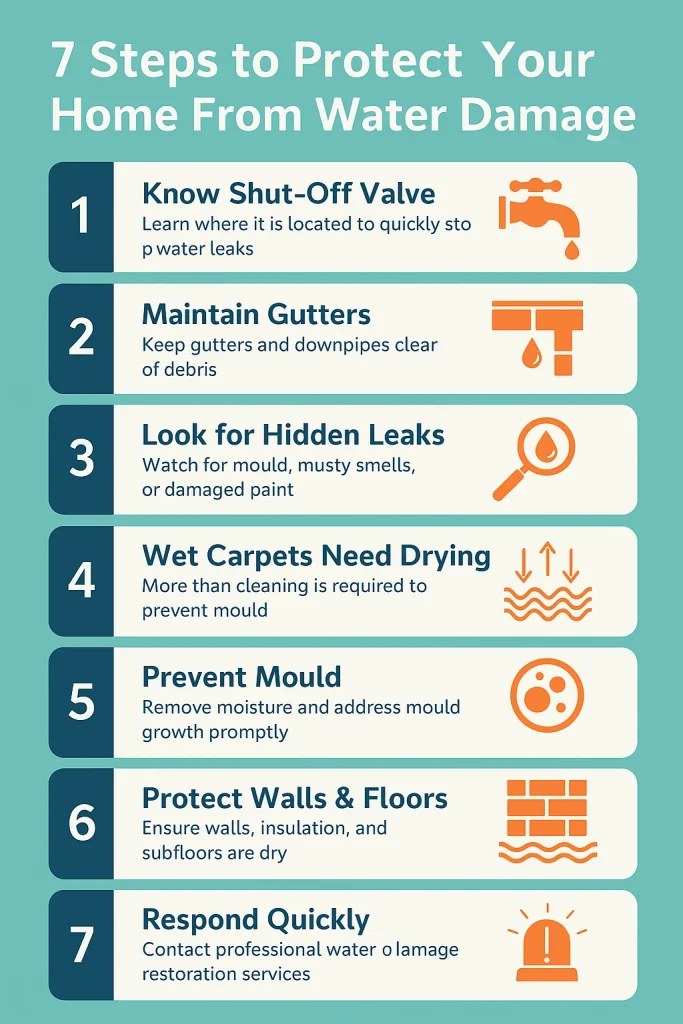
1. Know Where Your Main Water Shut-Off Valve Is
One of the simplest but most important steps is learning where your main shut-off valve is located. In the event of a burst pipe, turning it off immediately can prevent litres of water from spreading throughout your home. If you’re unsure, ask a plumber to show you during your next inspection.
2. Maintain Gutters and Drainage Systems
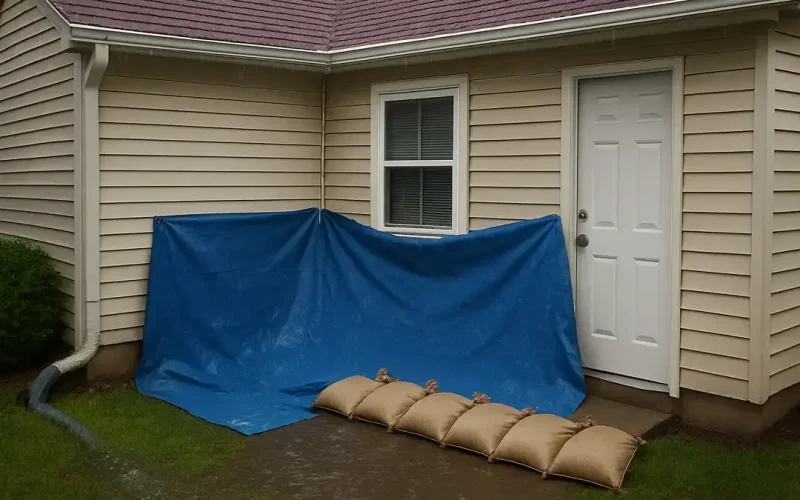
Poorly maintained gutters and downpipes are a leading cause of water damage. When leaves or debris block water flow, rain has nowhere to go but inside your roof or walls. Clean gutters regularly and make sure downpipes channel water well away from your property’s foundations. Installing leaf guards can also help reduce maintenance.
3. Look Out for Hidden Leaks
Not all water damage is obvious. Slow leaks inside walls, under sinks, or beneath flooring can go unnoticed until mould appears. Warning signs include musty odours, peeling paint, bubbling plaster, or unusual water bills. Using moisture detection tools — or booking an inspection with a restoration professional — can catch problems before they escalate.
4. Wet Carpets Need More Than Cleaning
After a flood or leak, many homeowners mistakenly believe carpet cleaning is enough. In reality, simply sucking up water only treats the surface. The underlay and subfloor beneath may remain saturated, leading to mould growth, odours, and structural issues. True wet carpet drying uses high-powered drying equipment to remove moisture from all layers, protecting both your carpet and your health.
5. Prevent Mould Before It Starts
Mould can begin growing within 24–48 hours in damp conditions. It spreads quickly and can cause respiratory issues, allergies, and long-term property damage. If you spot mould, don’t just wipe it away. Proper mould remediation follows international standards to remove spores safely and prevent regrowth, ensuring your home remains healthy.
6. Protect Walls, Insulation, and Subfloors
Water rarely affects just one surface. When walls and insulation get wet, moisture can remain trapped for weeks. Left untreated, this creates structural weakness and hidden mould growth. Subfloors, timber framing, and plasterboard are particularly vulnerable. Professional water damage restoration services use industrial air movers, dehumidifiers, and thermal imaging to ensure every hidden area is dried.
7. Respond Quickly and Call the Experts
Speed matters. The faster you act, the more likely you can save your belongings and avoid major repairs. If water damage occurs, contact a certified restoration company immediately. Professionals like Reztor Restoration combine 24/7 emergency response with advanced equipment to restore homes and businesses across Brisbane and beyond.
Final Thoughts
Water damage can be overwhelming, but prevention and quick action can make all the difference. From maintaining gutters to knowing when to call the experts, small steps now can save thousands later. Don’t rely on carpet cleaning alone — true restoration requires thorough drying and certified expertise. With preparation and the right help, your home can recover safely and quickly from any water emergency.
Further Reading